- Saturday Sites
- Posts
- 2 Infamous Hacks That Changed Privacy Forever
2 Infamous Hacks That Changed Privacy Forever
With tools to protect your personal data

Caleb Chiang
August 30, 2025 • Estimated Reading Time: 3 minutes
Table of Contents
Introduction
Hacks aren’t new. For decades, some of the smartest (and most dangerous) people on the planet have been finding ways to break into systems and steal data. From weak passwords to insecure vendors, history shows us that no company is truly bulletproof.
And while the tech has changed, the stakes remain the same. Your personal information is always on the line.
This week, we’re looking at 2 of the biggest hacks in history - Yahoo and Target. I also share tools you can use today to make sure you don’t end up as the next victim.
Yahoo (2013)
Back in 2013 and 2014, Yahoo suffered what’s still considered the largest data breach in history.
At first, the company said “only” 1 billion accounts had been affected. Years later, they admitted the truth: every single one of Yahoo’s 3 billion accounts was compromised.
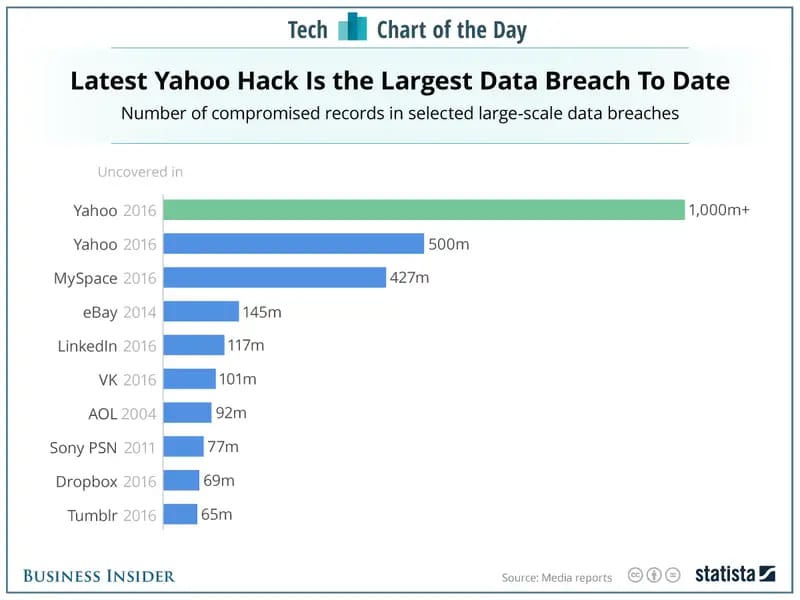
Yahoo hack vs other famous data breaches
Hackers got away with names, email addresses, phone numbers, birth dates, and even security questions. For years, most users had no idea their information was floating around on the dark web and Yahoo itself didn’t disclose the full extent until 2017, right as it was being acquired by Verizon.
The significance of this hack can’t be overstated.
It showed the world that even tech giants can hide breaches for years, leaving billions of people exposed to spam, phishing, and identity theft without warning. If you had a Yahoo account back then, your data was almost certainly part of it.
Target (2013)
This one was crazy.
In late 2013, right in the middle of the holiday shopping season, retail giant Target revealed a massive cyberattack that exposed the credit and debit card data of 40 million customers. Soon after, it was discovered that the hackers also stole the personal details — names, addresses, phone numbers, and emails — of 70 million more people.
The attackers gained access through a third-party HVAC contractor, then moved laterally into Target’s payment systems. Once inside, they installed malware on point-of-sale registers across stores nationwide. Shoppers had no idea that swiping their card at checkout was also handing it over to criminals.
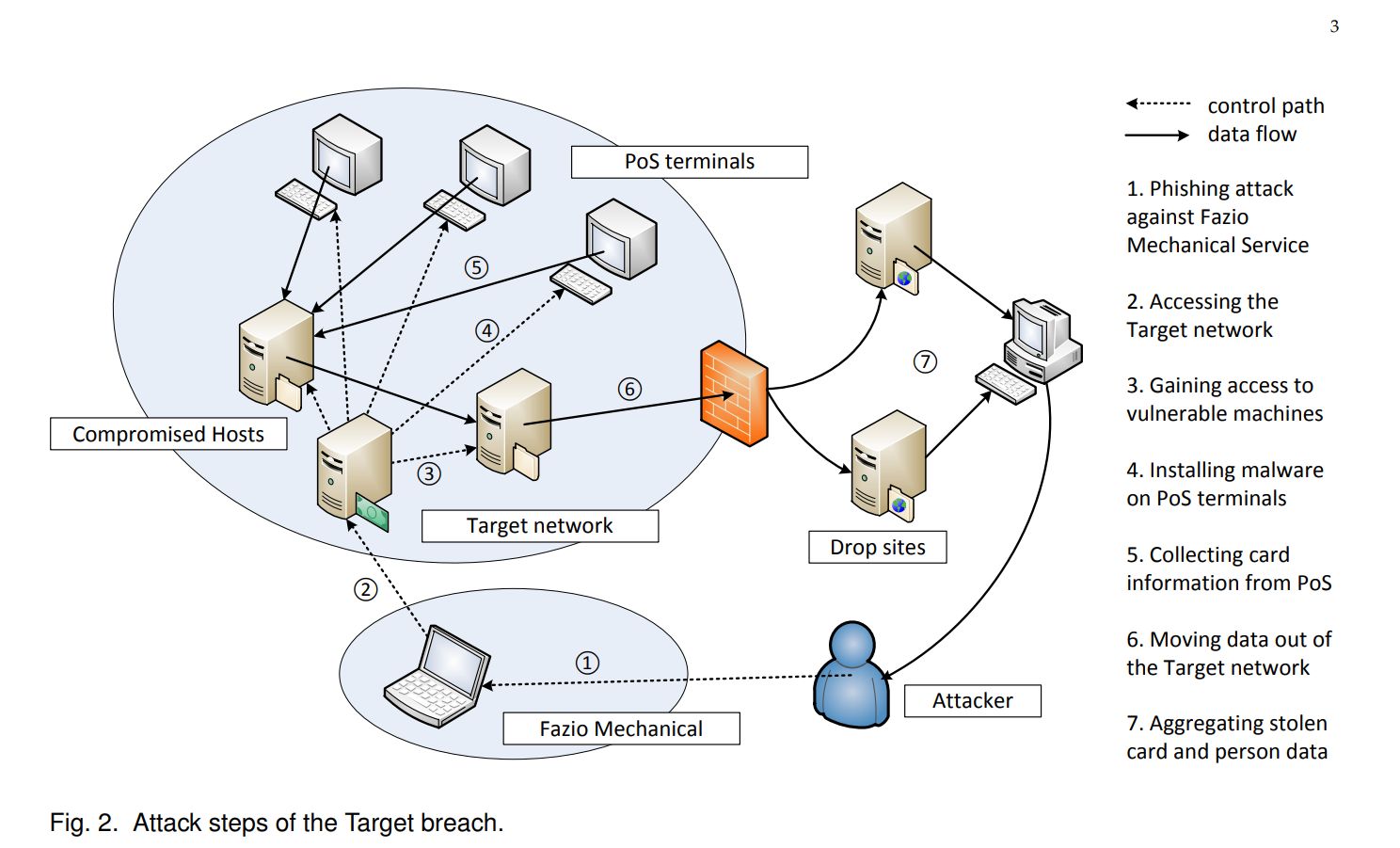
The attacker gained access to Target’s system through Fazio Mechanical, an HVAC contractor
The fallout was enormous. Banks had to reissue millions of cards, lawsuits piled up, and Target ultimately agreed to an $18.5 million settlement, one of the largest ever for a data breach at the time.
Beyond the money, the attack was a wake-up call: even everyday retail purchases can become gateways to massive data theft.
How You Can Protect Yourself Today
Breaches like Yahoo and Target prove that you can’t always trust companies to keep your data safe. However, there are steps you can take to protect yourself:
Use a password manager like Bitwarden or 1Password to generate strong, unique passwords for every account. That way, if one site is breached, the damage doesn’t spread.
Turn on two-factor authentication (2FA) wherever possible. Use an authenticator app (Authy, Google Authenticator) or even a hardware key (YubiKey) for maximum security.
Check if your info has been leaked using Have I Been Pwned. If your email shows up in old breaches, update your credentials immediately.
Takeaways
Hacks have been around for decades, and the truth is that even the biggest companies can’t always keep your data safe.
The lesson is clear: you can’t control companies from getting hacked, but you can protect yourself with tools like password managers and two-factor authentication.
If you found this issue helpful, share it with a friend who should be thinking more about their privacy, and follow me on X for updates and tips during the week.
And if you have a favorite tool you’d like to see featured in next week’s newsletter, just hit reply to this email. I’d love to hear your suggestions.