- Saturday Sites
- Posts
- Saturday Sites: Issue 01
Saturday Sites: Issue 01
Take back control of your digital life, discover the tools big tech doesn’t want you to use.

Caleb Chiang
July 12, 2025 • Estimated Reading Time: 3 minutes
Introduction
A little while ago, I was sitting in my Ethics in Computing class, brainstorming a topic for my final essay. I’ve always been curious about privacy and tech, so I decided to write about how companies like Google and Apple handle user privacy.
What I found surprised me.
On the surface, these companies claim to protect our privacy. Apple blocks third-party trackers on iPhones, and Google is phasing out cookies in Chrome. But when you dig deeper, the story gets complicated. Their privacy changes do stop outside advertisers from tracking you, but Google and Apple still keep your data for themselves.
And while they frame these moves as protecting users, they’ve also made it harder for small businesses to reach customers online. Now, the only way to run effective ads is to go through Google or Apple’s own platforms, meaning they make even more money while small businesses pay the price.
In short, it’s not just about protecting your privacy. It’s also about who controls the internet.
That made me realize how important it is to find tools that really protect your privacy, without having a giant tech company in the middle.
Tools That Respect Your Privacy
That’s where PrivacyTools.io comes in.
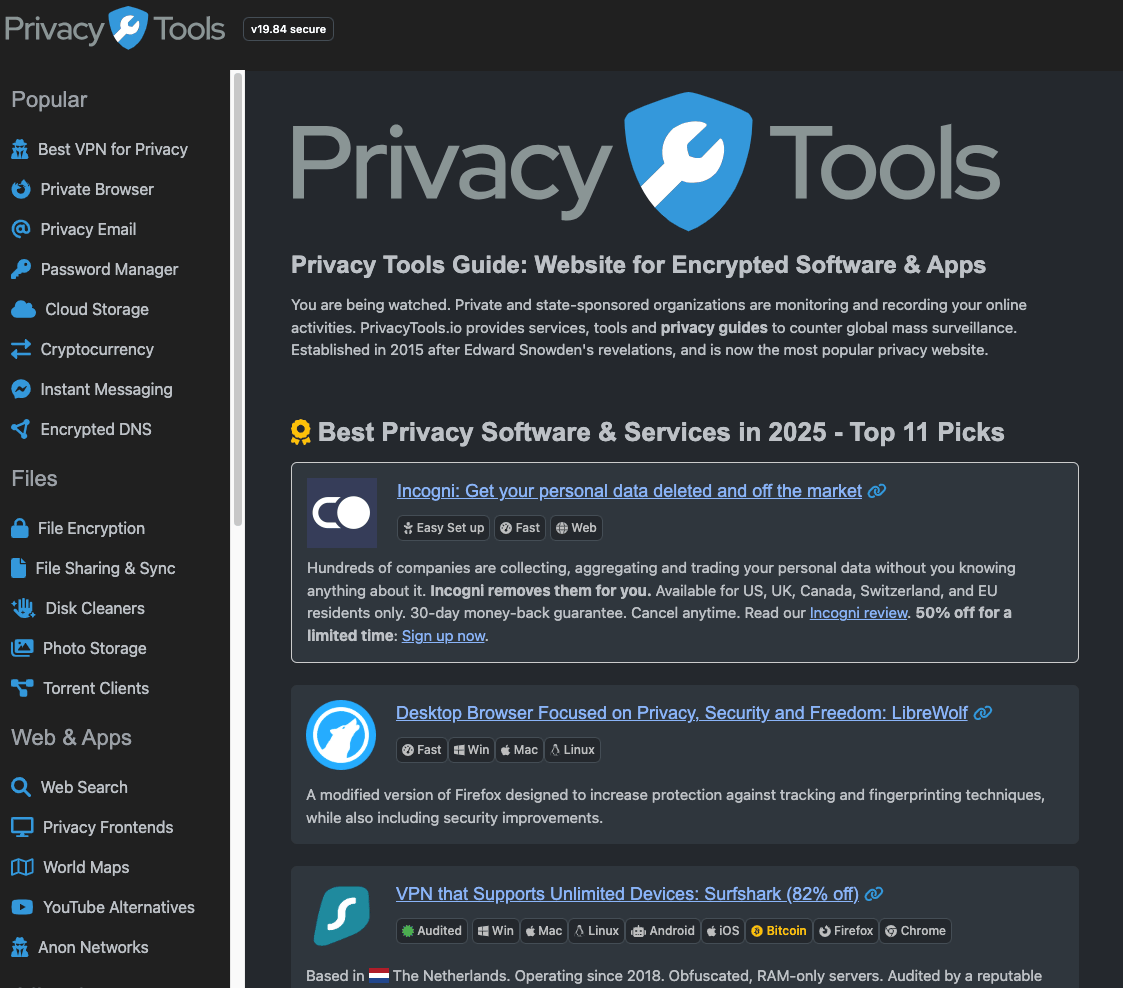
It’s a community-curated list of privacy-first tools. Apps and services that respect your data and don’t secretly track everything you do.
A brief history
The site originally started in 2013 as a simple GitHub project, built by privacy advocates who wanted to make it easier for people to find ethical tech tools. Over time, it grew into one of the most well-known privacy resources online. While it doesn’t publicly track exact visitor counts, PrivacyTools.io has been featured in tech forums and privacy communities with millions of visitors over the years, and is maintained by an open-source community of contributors around the world.
Exploring the site
PrivacyTools.io organizes dozens of privacy-focused apps into clear categories, making it easier to explore your options without getting overwhelmed. For each tool, the site gives you a description of what it does, its main features, and how it compares to other alternatives. It also highlights whether the project is open-source, what privacy policies the service follows, and which countries the companies are based in—factors that can affect how your data is handled.
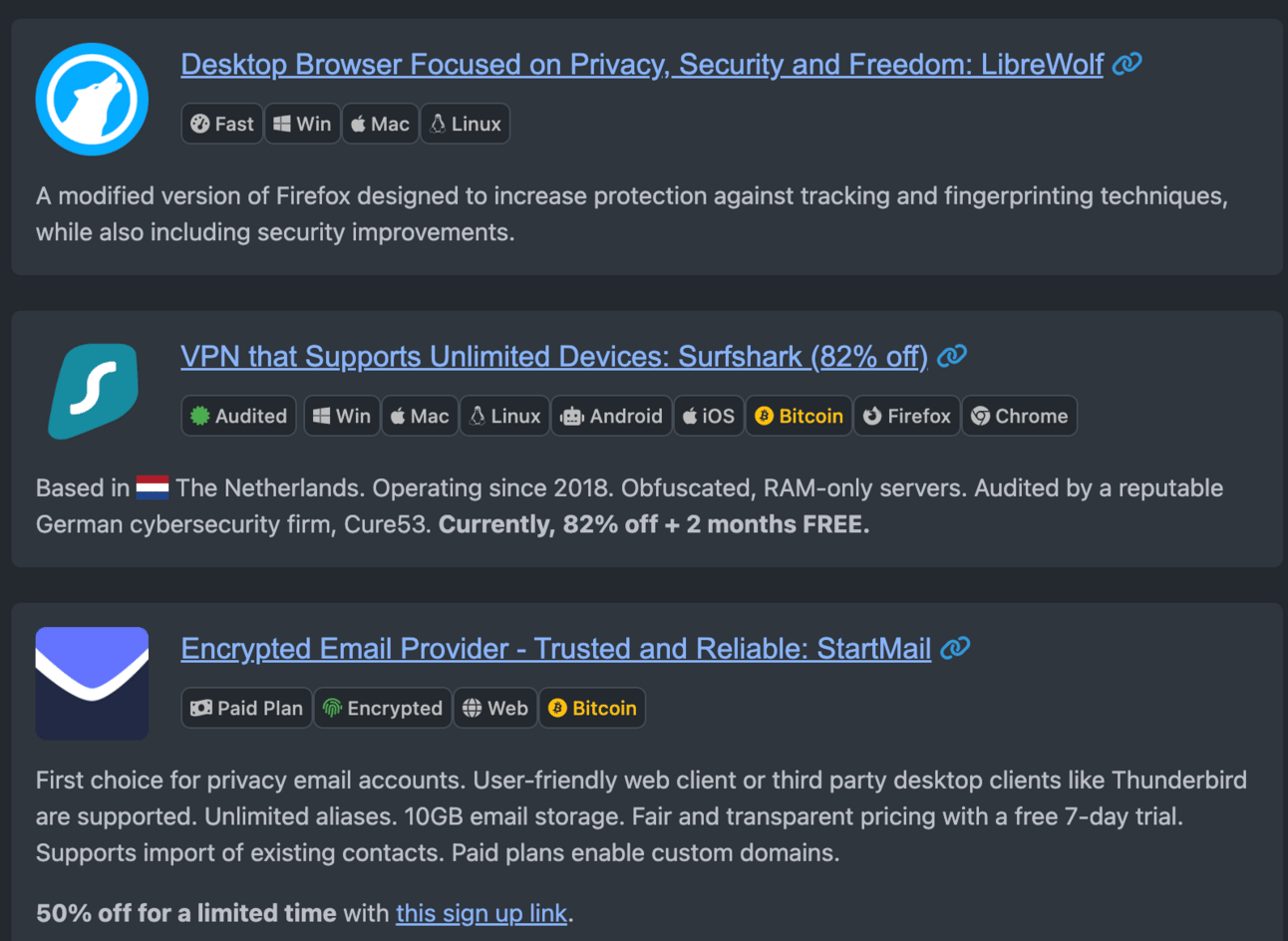
Whether you're looking for a safer search engine, a more private email provider, or a browser that blocks trackers by default, the site gives you a starting point. You don’t need to replace all your apps overnight, but if you want to reduce how much big tech companies know about you, this is one of the clearest places to start.
Let’s take a closer look at some of the categories covered on the site 👇
What You'll Find on PrivacyTools.io
Here are some of the categories they cover:
1.) Private Search Engines
Search engines like Google collect and store your search history to build advertising profiles. Private search engines, such as DuckDuckGo or SearX, don’t track your searches or store your personal information.
2.) Secure browsers
Most browsers allow websites to track your activity using cookies and other technologies. Privacy-focused browsers like Firefox, Brave, or Tor limit or block this tracking, giving you more control over what data leaves your device.
3.) Encrypted Email Services
Popular email services often scan your inbox for advertising data. Encrypted email services like Proton Mail or StartMail use built-in encryption to protect your messages from being read by third parties, including the email provider itself.
4.) Private Messaging Apps
Apps like Signal or Session offer end-to-end encryption, meaning only the sender and receiver can read the messages. These tools don’t store your conversations on their servers, limiting what data is exposed if the service is ever hacked.
5.) Password managers
Password managers such as Bitwarden or KeePassXC help you generate and store strong, unique passwords for every account. These tools encrypt your password database so only you can access it.
6.) VPNs & Encryption Tools
A Virtual Private Network (VPN) encrypts your internet traffic and hides your IP address from websites and internet providers. Some options, like Mullvad or Proton VPN, focus on privacy over marketing features.
You can browse the categories, compare the options, and decide what makes sense for your needs.
Final Thoughts
If you spend any time online, your data is being collected—whether you realize it or not. PrivacyTools.io won’t fix everything, but it’s a solid place to start if you want to take back some control over your digital life.
This site is for you if you:
Care about keeping your personal data private
Choosing who gets to track you
Protecting your information online.
If you enjoyed this or learned something new, I’d love to hear your thoughts.
Reply to this email and let me know. Whether it’s a question, feedback, or your favorite privacy tool I should check out.