- Saturday Sites
- Posts
- The Hidden Risks of Talking to AI
The Hidden Risks of Talking to AI
I dug into ChatGPT's privacy policy, so you don't have to.

Caleb Chiang
August 23, 2025 • Estimated Reading Time: 2 minutes

Table of Contents
Introduction
Everyone knows AI tools are collecting our data. Nothing new there.
But how much do they collect, what kind of data is it, and what do these companies really do with it? That’s what we’re unpacking this week.
This week, I went where almost no user dares to go. Deep into the privacy policies. (Yes, those endless walls of text we all scroll past and click “I agree.”) Don’t worry, I’ll break them down into plain English so you don’t have to suffer through the legal jargon.
OpenAI
For anyone who’s been living under a rock, OpenAI is the company behind ChatGPT, the wildly popular AI model that’s become the face of this new AI boom.

ChatGPT reached 1 million users faster than almost any other major tech platform.
I took a deep dive into the privacy policy of OpenAI and what I found might surprise you.
What Data Does OpenAI Collect?
1.) Account & identity info
Name, email, phone number, login details, billing/payment info if you’re a paid user.
2.) Your content
Everything you type into ChatGPT (prompts + responses).
Files, images, or audio you upload.
If you delete a conversation, ChatGPT stores that conversation data in their database for 30 days stating that it is used to detect abuse
3.) Technical details
IP address, browser type, device info, operating system, and approximate location.
Log data like when you used the service and for how long
4.) Communication data
If you email OpenAI, use support, or interact through third-party apps, those messages are collected too.
5.) Cookies & trackers
They use cookies and similar tech to remember settings, personalize your experience, and run analytics.
What Does OpenAI Do With Your Data?
OpenAI uses the data it collects to make ChatGPT run smoothly, improve the models, and keep the system safe.
That means your prompts and uploads can be reviewed (unless you opt out), your technical details help with security and troubleshooting, and your account information is needed for billing or communication.
Notably, nowhere in the privacy policy does it state that OpenAI monetizes your data directly. It isn’t sold for ads or shared with marketers.
On the surface, it’s all fairly standard for a tech company but the consequences are bigger here.
Because your conversations can be stored and analyzed, using ChatGPT means you risk exposing sensitive personal, financial, or even work-related information to a system that doesn’t forget easily.
In short, the convenience of an AI assistant comes with the tradeoff of handing over more of your digital footprint than you might realize.
Simple Ways to Protect Your Privacy
Use Temporary Chats
Temporary chats aren’t saved in your history, so sensitive conversations don’t linger on your account.

Turn Off Memory
Memory can personalize responses, but it also stores summaries of your info. Disabling it lowers the risk if your account is ever compromised.

Enable MFA
Multi-factor authentication adds an extra layer of protection, making it harder for anyone to break into your account.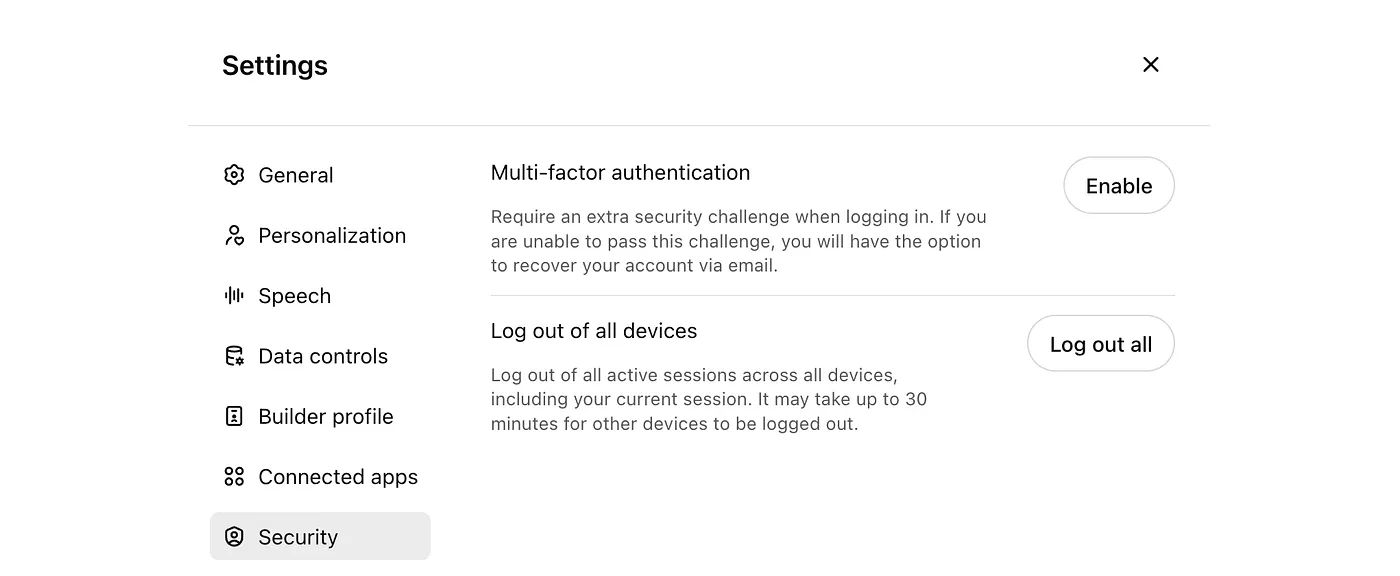
Takeaways
AI is an incredible tool for boosting productivity and automating everyday tasks, but it’s important to remember that what you share with these systems isn’t truly private.
The tradeoff for convenience is exposure, so use them wisely and be mindful of what information you type in.
If you found this useful, share it with a friend who should know what really happens to their data. And for more privacy tools, tips, and deep dives, follow me on X @CalebChiang_.
See you next Saturday!